A new UK Carbon Border Adjustment Mechanism (CBAM) will apply to certain imported goods from 2027. Here, we look at the products covered, the registration threshold, and why businesses may want to review their imports well in advance.
What is CBAM?
The UK’s Carbon Border Adjustment Mechanism (CBAM), is a new tax on certain imported goods based on the emissions associated with their production. The government’s aim is to reduce the risk of carbon leakage by applying a comparable carbon cost to specified imports as well as to UK-produced goods already subject to carbon pricing. The mechanism will take effect from 1 January 2027.
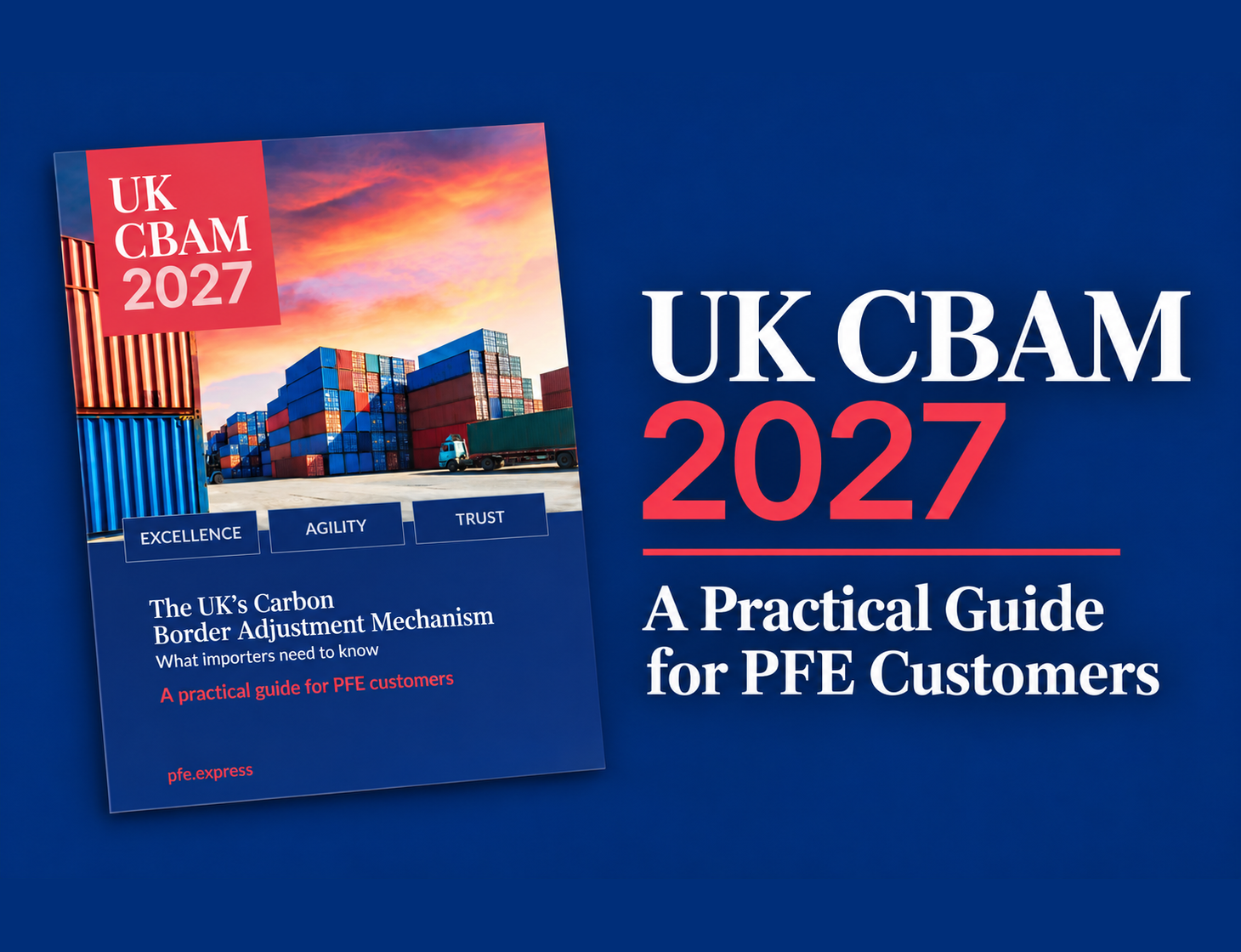
Download our CBAM Practical Guide for Customers
Which goods are covered?
CBAM will apply to specified goods within five sectors: aluminium, cement, fertiliser, hydrogen, and iron and steel. It does not apply to every product within those sectors. Instead, it applies to the specific commodity codes listed by the government.
For many businesses, the most relevant areas to check first are likely to be aluminium and iron and steel. The important point is that the test is based on the commodity code used on the import declaration, not simply the commercial description of the goods.
For example, goods within scope include screws, bolts, nuts, rivets, washers and similar articles of iron or steel under heading 7318, as well as aluminium tube or pipe fittings, such as couplings, elbows and sleeves, under heading 7609. Both headings are specifically included in HMRC’s list of goods that will be liable for CBAM. GOV.UK
These examples also show why businesses should look beyond products that might obviously be thought of as raw aluminium or steel. CBAM can apply to manufactured components and finished articles where the relevant commodity code falls within scope.
For the full list of commodity codes within scope of CBAM, see the GOV.UK guidance: Check which goods are in scope of Carbon Border Adjustment Mechanism (CBAM)
When does registration become relevant?
The policy summary says businesses may need to register with HMRC if they meet the £50,000 threshold for in-scope CBAM goods. That threshold is assessed using both a forward-looking test and a backward-looking test. In simple terms, businesses need to consider both what they expect to import and what they have already imported over a rolling period.
The first CBAM accounting period will run from 1 January 2027 to 31 December 2027, with the first return and payment due by 31 May 2028. After that, accounting periods will move to a quarterly cycle.
Why this matters now
Although implementation does not begin until 2027, this is a change worth checking well in advance. Businesses importing goods that may fall within scope will want to review their commodity codes, monitor the customs value of any in-scope imports, and make sure they can identify those goods clearly from their customs data.
For businesses importing aluminium or iron and steel products, the key question is not whether those sectors sound relevant in principle, but whether the actual goods imported fall within the listed CBAM commodity codes and whether the import values are likely to approach the registration threshold.
Conclusion
CBAM is not an immediate issue for every business, but it is a confirmed change with a clear start date, defined sectors and a registration threshold. For anyone importing potentially in-scope goods, the sensible next step is to review those products now rather than wait until 2027.
As always, PFE will continue to monitor developments. If you would like support reviewing the customs side of your imports, including commodity codes and whether particular goods may fall within scope, our team will be happy to help.
Download our CBAM Practical Guide for Customers
If you have any questions about how this may affect your shipments, please speak to our Customs Team on 01376 533039 or email [email protected].
References:
GOV.UK – Carbon border adjustment mechanism (CBAM): Policy summary
https://www.gov.uk/government/publications/carbon-border-adjustment-mechanism-cbam-policy-summary/carbon-border-adjustment-mechanism-cbam-policy-summary
GOV.UK – Carbon Border Adjustment Mechanism
https://www.gov.uk/government/publications/introduction-of-carbon-border-adjustment-mechanism/carbon-border-adjustment-mechanism
GOV.UK – Factsheet: Carbon border adjustment mechanism (CBAM)
https://www.gov.uk/government/publications/factsheet-carbon-border-adjustment-mechanism-cbam/factsheet-carbon-border-adjustment-mechanism
GOV.UK – Draft regulations: Carbon Border Adjustment Mechanism (CBAM)
https://www.gov.uk/government/consultations/draft-regulations-carbon-border-adjustment-mechanism-cbam
GOV.UK – Carbon Border Adjustment Mechanism collection page
https://www.gov.uk/government/collections/carbon-border-adjustment-mechanism