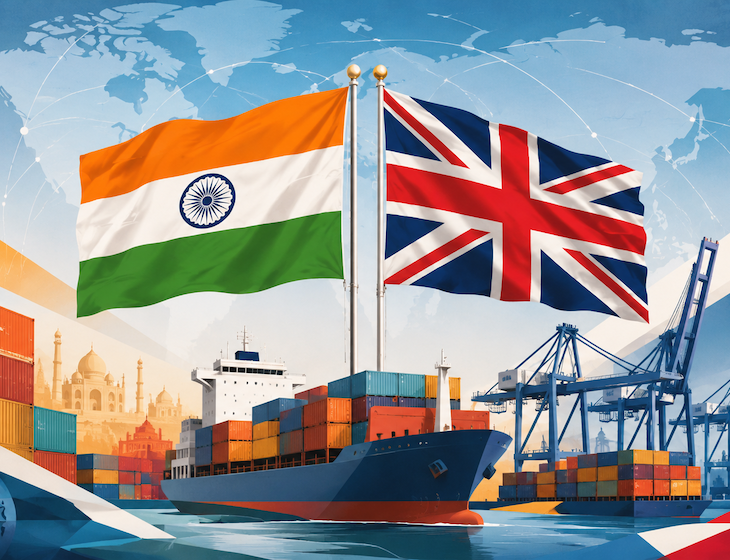
The UK Government has confirmed that the UK-India Free Trade Agreement will enter into force on 15 July 2026, marking an important development in the trading relationship between the two countries.
Businesses have a short window to prepare before the new trading arrangements begin to apply. From 15 July, eligible Indian-origin goods entering the UK will benefit from preferential tariff treatment, provided the relevant product, customs and origin requirements are met.
The agreement is significant for businesses sourcing from India, particularly across product areas such as textiles, garments, leather goods and footwear. It is also expected to support wider trade growth between the UK and India, creating new opportunities for businesses operating across both markets.
Customers who want to review the Government’s latest announcement can do so here:
UK-India FTA enters into force on 15 July 2026
Why this matters
The UK Government expects the agreement to increase bilateral trade by £25.5 billion a year in the long term, add £4.8 billion to UK GDP and increase real wages by £2.2 billion.
More immediately, businesses and consumers could see around £400 million in tariff reductions within the first year. For customers importing from India, the main commercial impact is likely to be around landed cost, product competitiveness and future sourcing decisions.
For businesses already importing from or exporting to India, the agreement may provide opportunities to reduce costs and improve competitiveness. For others, it may prompt a reassessment of how India fits within broader international sourcing, procurement or market expansion plans.
As with all Free Trade Agreements, the exact benefit will depend on the goods involved and the tariff schedule that applies. Some reductions may take effect from 15 July, while others may be phased in over time.
Key Tariff Reductions for Indian Goods
The agreement is broad, with the UK set to eliminate tariffs on 99% of Indian goods entering the UK. Some sensitive sectors remain excluded, and not all products will benefit in the same way.
For customers sourcing from India, confirmed product areas covered by tariff reductions include:
- textiles and fabrics
- garments and apparel
- leather goods
- Footwear
- consumer electronics and other electrical goods
The introduction of preferential trading arrangements between the UK and India could further strengthen commercial ties and encourage greater trade activity across these sectors.
Customers importing these goods should review product coverage carefully. The agreement creates the framework for lower tariffs, but the practical benefit will depend on the commodity code, the applicable tariff schedule and whether the goods meet the required rules of origin.
Further details on the full agreement and tariff schedules are available through the Government’s UK-India trade deal collection:
UK-India trade deal collection page
What changes from 15 July?
From 15 July, the agreement moves from a signed trade deal to a live trading arrangement.
Customs entries made from that date for eligible Indian-origin goods may be able to use the new FTA arrangements. Where the goods qualify, preferential tariff treatment can be claimed at entry.
The key point is that the benefit is conditional. Goods must fall within the relevant product coverage, meet the origin requirements and be supported by the correct documentation. Without this, the standard tariff treatment may still apply.
The agreement is also intended to provide clearer trading conditions between the UK and India, including customs arrangements and a more structured framework for long-term trade. For importers, the immediate priority is to understand whether existing shipments can make use of the agreement from 15 July.
What should be reviewed now?
With the implementation date now confirmed, customers sourcing from India should review:
- which goods are being imported from India
- whether those goods are covered by the agreement
- whether the correct commodity codes are being used
- whether suppliers can support the relevant origin requirements
- whether the right documentation will be available
- whether customs entry processes are ready for 15 July
For some businesses, this may confirm that existing shipments are well placed to benefit. For others, it may highlight areas where product classification, supplier paperwork or customs processes need to be reviewed before preferential treatment can be claimed.
The Government has published specific information on rules of origin and origin declarations, which customers may need to review when assessing whether goods qualify for preferential treatment:
UK-India CETA Chapter 3: Rules of Origin
How PFE can help
The new FTA gives customers sourcing from India a useful opportunity to review product coverage, customs requirements and documentation ahead of 15 July.
PFE’s customs team can support customers with the practical checks needed before preferential tariff treatment is claimed. This includes reviewing commodity codes, checking whether goods are likely to fall within the relevant tariff schedules, understanding the origin position and making sure the correct supporting documentation is in place.
For customers already importing from India, the priority is to make sure eligible goods can be entered correctly from the point the agreement comes into force. For others, the agreement may also provide a useful prompt to review sourcing options and future procurement plans.
Customers who want to check current tariff information can also refer to the Government’s UK tariff guidance:
Tariffs on goods imported into the UK
The key takeaway
The entry into force of the UK-India Free Trade Agreement represents an important development in the economic relationship between the two countries.
For customers sourcing from India, the agreement may create opportunities to reduce tariffs reassess future sourcing strategies across a range of goods,
However, the benefit will depend on the products involved, the tariff schedule that applies and whether the correct rules-of-origin and documentation requirements are met.
As trade volumes develop under the new framework, the agreement is likely to become an important consideration for businesses with interests in one of the world’s largest and fastest-growing markets. The next few weeks should therefore be used to review India shipments, check product coverage and make sure customs arrangements are ready before the agreement takes effect.
For more information, please don’t hesitate to contact our Customer Service Team on 01376 533039 or email [email protected].
Sources:
UK-India FTA enters into force on 15 July 2026
UK-India trade deal collection page
Comprehensive Economic and Trade Agreement between the UK and India